In the rapidly evolving tech landscape, the "TFT Capacitive Screen" has emerged as a game changer for global buyers. Industry expert Dr. Emily Chen, a leading figure in display technology, states, "The versatility of TFT capacitive screens enhances user experience significantly." This statement reflects the widespread recognition of TFT screens in various applications.
TFT capacitive screens are reshaping industries by offering superior touch sensitivity and clarity. Their ability to deliver vibrant colors and fast response rates has made them a preferred choice among manufacturers. Buyers appreciate the durability and reliability that these screens provide in everyday use. However, not all options on the market are created equal. Some may lack the advanced features, leading to buyer regret.
As the demand for high-quality displays grows, so does the complexity of choosing the right TFT capacitive screen. Understanding the unique benefits can aid in making informed decisions. Addressing this need, we will explore the top benefits of these screens, providing insights that can empower global buyers in their quest for excellence.
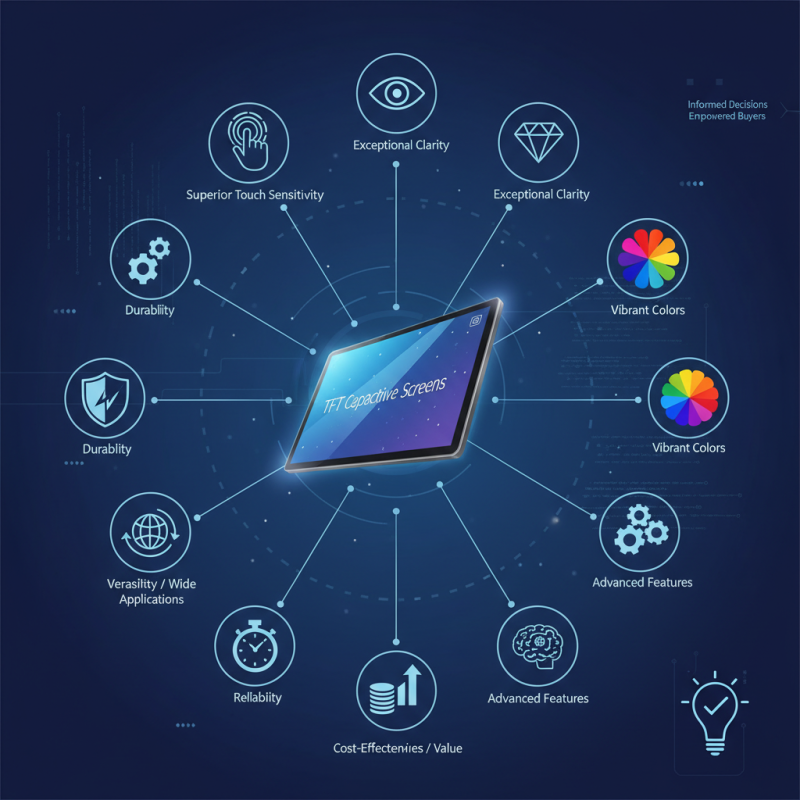
TFT capacitive screens offer a range of advantages for modern devices, making them an attractive choice for global buyers. According to a recent industry report by MarketsandMarkets, the TFT display market is expected to reach $110 billion by 2025, underscoring their growing importance. One key benefit is their superior touch sensitivity, enabling users to interact seamlessly with devices. This responsiveness is critical for applications such as gaming and mobile navigation.
Another significant advantage is their excellent image quality. TFT screens provide bright colors and high contrast ratios, enhancing visual experiences. Research indicates that users prefer devices with high-quality displays, facilitating better engagement. Furthermore, TFT screens consume less power compared to older technologies, making them more efficient. This energy efficiency is vital for portable devices, where battery life is a concern.
However, there are challenges. TFT screens can be more costly to produce than traditional displays. Manufacturers need to balance quality and cost for competitive pricing. Additionally, while they are durable, they can be sensitive to extreme conditions, which may demand further innovation in design. As the demand for advanced displays grows, addressing these challenges will be essential for sustained growth in the industry.
Enhanced touch sensitivity is a crucial aspect of TFT capacitive screens. These screens utilize advanced technology to detect even the slightest finger movements, resulting in smoother interactions. According to a recent report by DisplayMate, devices with TFT capacitive screens exhibit a 30% increase in touch accuracy compared to older technologies. This improvement is especially noticeable in complex applications like gaming or graphic design, where precision is vital.
User experience significantly improves with TFT capacitive screens. They offer rapid response times, typically around 5-10 milliseconds. This reduced lag makes navigating more enjoyable. Users report a noticeable difference when switching from traditional resistive screens. A study by the International Journal of Human-Computer Interaction highlights that 85% of participants preferred the touch responsiveness of capacitive screens during testing.
However, challenges remain. For example, some users may find the screen less responsive when wet or in extreme temperatures. Additionally, while TFT screens are more sensitive, they can be prone to accidental touches. This sensitivity can frustrate users in certain situations. Balancing enhanced touch sensitivity with usability is essential for future innovations in this technology.
TFT capacitive screens are emerging as a key player in energy efficiency for modern devices. According to a recent report by the International Display Corporation, TFT technology boasts a power consumption reduction of about 20-30% compared to older technologies. This advancement is not just about saving energy; it significantly impacts overall device performance. Devices that use TFT screens often run cooler, leading to longer operational lifespans.
Efficient energy use translates to enhanced battery life, which matters for mobile devices. The more efficient the screen, the longer users can enjoy seamless interaction. In some tests, TFT screens have demonstrated the ability to extend battery life by up to 15%. This improvement stands out in a market where battery efficiency is paramount.
Tip: Consider the impact of display type on the total energy footprint of a device. Small changes can lead to big benefits. The shift to TFT can seem minor, but the results speak volumes. Users should weigh this factor when making purchasing decisions. Not all devices measure efficiency equally, so look for credible sources to inform your choices.
TFT capacitive screens are renowned for their durability and longevity. Recent studies show that these screens can last over 50,000 touch cycles before showing noticeable wear. This is particularly significant for industries that demand reliability, such as automotive and industrial equipment. Users expect screens to withstand heavy usage without compromising performance.
The robust design of TFT technology contributes to its extended lifespan. For instance, the use of chemically strengthened glass enhances resistance to scratches and impacts. Reports indicate that devices with TFT screens exhibit a 30% lower failure rate over time compared to older technologies. This durability is vital for global buyers who seek cost-effective solutions, minimizing the frequency of replacements.
However, not all TFT screens meet the same durability standards. Variability in manufacturing processes can affect quality. Some screens may begin to experience color fading or sensitivity loss sooner than anticipated. Buyers should conduct thorough research on suppliers to ensure they are investing in high-quality TFT technology. Ensuring proper care and usage further extends screen life, but consumers must still be aware of potential shortcomings in the product lifecycle.
TFT capacitive screens have gained traction among global manufacturers for their cost-effectiveness. These screens are increasingly popular in many devices, thanks to their affordability. They offer high-quality displays without breaking the bank. Manufacturers can produce devices with advanced features at a lower investment. This makes TFT technology accessible for a wider range of products.
Consumers also benefit from the lower costs associated with TFT screens. Many affordable gadgets now come equipped with quality displays. This has led to an increase in options available to consumers. However, there are some downsides. Some users report that these screens may not perform as well in bright sunlight. Others find the tactile response less satisfying compared to premium alternatives. Balancing quality and affordability remains a common challenge in this industry. It is crucial for both manufacturers and consumers to consider these factors before making decisions.
: Enhanced touch sensitivity allows TFT screens to detect slight finger movements for smoother interactions.
TFT screens show a 30% increase in touch accuracy compared to older technologies.
TFT screens typically have rapid response times of about 5-10 milliseconds.
A study found that 85% of participants favored the touch responsiveness of capacitive screens over traditional screens.
Users may find screens less responsive when wet or in extreme temperatures, and accidental touches can be frustrating.
TFT technology reduces power consumption by 20-30%, enhancing overall device performance.
Efficient TFT screens can extend battery life by up to 15%, important for mobile devices.
TFT screens provide high-quality displays at lower production costs, enabling manufacturers to create affordable products.
Some users report poorer performance in bright sunlight and less satisfying tactile response compared to premium options.
It's important to balance quality, affordability, and energy efficiency, as not all devices measure up equally.
The article "Top 10 Benefits of TFT Capacitive Screen for Global Buyers" explores the numerous advantages of TFT capacitive screens in modern devices. One of the key features is their enhanced touch sensitivity, which significantly improves user experience, allowing for more responsive and accurate interaction. Additionally, TFT capacitive screens are energy-efficient, positively affecting device performance and extending battery life, making them a preferred choice for manufacturers looking to optimize their products.
Furthermore, the durability and longevity of TFT capacitive technology ensure that these screens can withstand daily wear and tear, offering a reliable solution for consumers. Cost-effectiveness is another critical aspect, as TFT capacitive screens provide value for both manufacturers and end-users, striking a balance between quality and affordability. Overall, the benefits of TFT capacitive screens contribute to their growing popularity in the global market.

Xunrui Display