Choosing the right TFT display screen can feel overwhelming. With various options on the market, it's crucial to consider your specific needs. According to a recent report by MarketsandMarkets, the global TFT display market is expected to grow significantly, reaching over $200 billion by 2025. This highlights the increasing importance of making informed decisions.
Industry expert Dr. Jane Smith states, “Understanding your application is key to selecting the right TFT display screen.” Her words emphasize the need for clarity when choosing among different types, sizes, and resolutions. Each factor can impact usability and functionality.
Many companies overlook important specifications, focusing only on price. However, a low-cost option might compromise quality, affecting performance. Reflecting on your purpose and environment is vital. Consider aspects like brightness, viewing angles, and power consumption. Each choice paves the way for a successful setup.
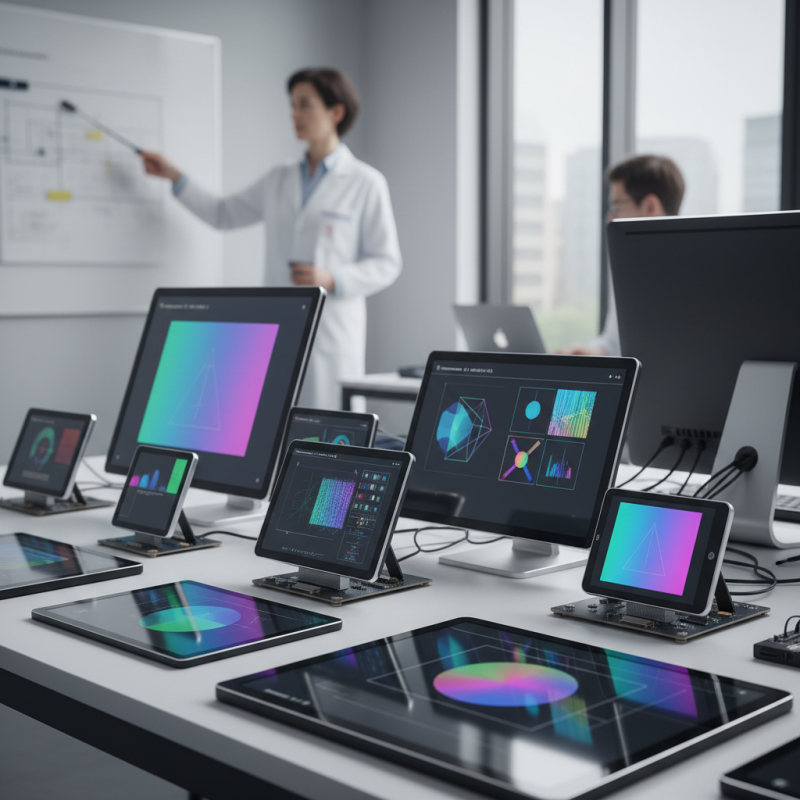
Understanding the Basics of TFT Display Technology
When selecting a TFT display screen, it's crucial to grasp the fundamentals of TFT technology. Thin Film Transistors (TFT) enhance image quality and response times. This technology relies on a matrix of thin-film transistors to control individual pixels. It allows for sharper images and better color accuracy, which are vital for various applications, from smartphones to industrial displays. According to a recent industry report, the global TFT LCD market is projected to reach $155 billion by 2025, driven by increasing demand for high-resolution displays.
Tip: Assess your needs before purchasing. Consider the size and resolution of the screen. A higher pixel density provides better detail, especially for graphics-intensive applications. Screen brightness and contrast levels also impact usability in different environments.
Another aspect to ponder is the viewing angle. TFT displays offer different strengths in this area. Some models may show color distortion at sharp angles. Depending on the intended use, this could be a significant drawback. Market studies suggest that consumers increasingly prefer displays with wide-view technology for better image consistency.
Tip: Test the display in real-world settings. Always compare different models side by side. It's essential to ensure the display meets your expectations in diverse lighting conditions.
Key Features to Consider When Selecting a TFT Display
When selecting a TFT display screen, there are several key features to consider. Resolution plays a crucial role in image clarity. A higher resolution provides sharper images. Look for screens with at least 720p for basic needs. For a more immersive experience, 1080p is often preferred. Color depth is another important aspect. A display with greater color depth can show more vibrant colors. Aim for at least 16.7 million colors for decent quality.
Another essential feature is brightness. Measured in nits, a display with at least 250 nits is generally suitable for most environments. However, if you plan to use your screen outdoors, you may need a brighter option. Viewing angle should not be overlooked. Some TFT displays can become washed out at certain angles. A wide viewing angle ensures consistent image quality from different perspectives.
Finally, consider the response time. A lower response time reduces motion blur during fast action scenes. This is especially important for gaming or sports viewing. Remember that while specification is important, personal preference matters too. Choosing a display can sometimes feel overwhelming. Take your time to research and analyze different options. Test a few models if possible to see what you truly prefer.
How to Choose the Best TFT Display Screen for Your Needs? - Key Features to Consider When Selecting a TFT Display
| Feature |
Importance |
Recommended Specification |
| Resolution |
High resolution provides better image clarity |
1920 x 1080 (Full HD) or higher |
| Contrast Ratio |
A higher contrast ratio enhances visibility |
1000:1 or above |
| Viewing Angles |
Wider angles ensure good visibility from different positions |
178° horizontal and vertical |
| Color Depth |
Greater color depth results in more detailed images |
24-bit (16.7 million colors) |
| Backlight Type |
LED backlighting provides better brightness and efficiency |
LED backlight |
| Screen Size |
Larger screens enhance immersion |
At least 7 inches |
| Touch Capability |
Touchscreens provide easier interaction |
Capacitive touch support |
Evaluating the Resolution and Screen Size for Your Application
When selecting a TFT display screen, resolution and screen size are vital aspects to consider. The resolution determines the sharpness of the images. Higher resolutions provide clearer, more detailed visuals. For applications such as gaming or graphic design, a higher resolution is desirable. However, for simple applications, a lower resolution may suffice. It’s essential to match the resolution to the visual demands of your project.
Screen size also plays a crucial role. Larger screens offer a more immersive experience but require more space. A 10-inch screen may suit compact setups, while a 15-inch display could enhance usability in larger environments. If you overlook the display size, it may lead to user discomfort over time. Be cautious about the experience you want to deliver.
Tips: Consider where the screen will be used. Different environments can affect your choice. Also, think about viewing distance. If users are far away, a larger size may be necessary for visibility. Lastly, test the display before fully committing. Sometimes, specifications can be misleading. Assess how the screen performs in real-life scenarios to ensure it meets your needs.
Screen Size vs Resolution for TFT Displays
Assessing Brightness, Contrast Ratio, and Color Depth
When selecting a TFT display screen, brightness, contrast ratio, and color depth are crucial factors. Brightness, measured in nits, indicates how well a display performs in various lighting conditions. A brightness level above 300 nits is often considered adequate for indoor use. However, for outdoor visibility, levels of 500 nits or higher are recommended. According to a recent industry report, up to 70% of users prefer displays that maintain clarity under bright conditions.
Contrast ratio measures the difference between the brightest white and the darkest black on screen. A higher contrast ratio enhances image quality, making visuals more dynamic. Ratios of 1000:1 are typical for most TFT screens. However, premium models can reach 3000:1 or higher. These differences can be significant in applications like gaming or graphic design, where details matter. Still, it’s essential to remember that specifications alone don’t guarantee a good viewing experience.
Color depth represents the number of colors a screen can display. A depth of 8 bits results in 16.7 million colors, which suffices for most casual use. Some high-end displays offer 10 bits or more, leading to over a billion colors. Yet, users often overlook how this affects their experience. A display may show deep colors, but poor calibration can lead to inaccurate representations. Conducting tests or referring to professional reviews can help users navigate this complexity, ultimately leading to a more informed purchase.
Comparing Cost and Brand Reputation in TFT Displays
When selecting a TFT display, it’s essential to compare the costs and brand reputations. Price alone can be misleading. A cheaper model might seem appealing, but long-term reliability is crucial. Investing in a more reputable brand often leads to better performance. Lower-quality displays can have issues like color bleeding or poor viewing angles. These problems impact user experience significantly.
Brand reputation plays a vital role in the choice of a TFT display. Established brands usually bring years of experience. They often provide clearer warranties and reliable customer support. However, not all lesser-known brands lack quality. Some new entrants offer impressive features at competitive prices. Researching user reviews and expert opinions can help you identify these gems. But remember, user feedback is subjective. Individual experiences vary greatly.
Cost versus reputation requires careful consideration. A high price doesn’t always guarantee superior quality. It's wise to weigh features against price points. Reflecting on your specific needs is an essential step. For example, will you use the display in bright light? Or is color accuracy crucial for your projects? Take time to evaluate your priorities before making a decision.
FAQS
: TFT stands for Thin Film Transistors. It enhances image quality and response times for displays.
Higher resolutions provide clearer images. They are crucial for graphics-intensive applications like gaming and design.
Larger screens offer immersive experiences. But they require more space, which can be a challenge in compact setups.
Consider size, resolution, brightness, and contrast. Test displays in real-world settings to ensure they meet your needs.
Some models distort colors at sharp angles. Wide-view technology is preferred for consistent images in various lighting.
No, lower-priced models can lack reliability. Balance cost with brand reputation and features for better long-term performance.
Research user reviews and expert opinions. Understand that individual experiences can vary widely and reflect on your needs.
Some newer brands offer competitive features. Always compare their offerings with established ones to spot potential value.
Conclusion
Choosing the best TFT display screen requires a comprehensive understanding of the underlying technology and its key features. Begin by familiarizing yourself with the fundamentals of TFT display technology, including how it operates and its various advantages. Important criteria to consider include the resolution and screen size that best suit your specific application, as these factors greatly influence visual clarity and user experience.
In addition, evaluating attributes like brightness, contrast ratio, and color depth is crucial for ensuring optimal display performance under varying conditions. Lastly, while selecting a TFT display screen, take into account the cost against brand reputation, as this can help you make an informed decision that balances quality with budgetary constraints. Overall, careful attention to these elements will guide you in selecting the ideal TFT display screen that meets your needs.

 Xunrui Display