Finding the right Tft Lcd Color Screen supplier requires more than comparing online prices. A reliable partner should prove performance through samples, technical records, and consistent production results. Product buyers need to examine brightness, contrast, viewing angle, response time, interface type, and operating temperature. These details affect whether a display remains readable inside a vehicle, medical device, or outdoor control panel.
A practical evaluation begins with a real sample, not only a digital catalogue. Ask the supplier to provide dimensional drawings, test reports, quality standards, and clear warranty terms. Check the screen under bright light, low temperatures, and continuous operation. Look closely for uneven backlighting, dead pixels, loose connectors, or color changes after several hours. Factory experience also matters. A supplier with traceable materials, trained technicians, and documented inspection procedures offers stronger confidence. Communication is another useful signal. Technical answers should be specific, timely, and supported by evidence.
A polished website is not proof of manufacturing ability. This is easy to forget. Buyers should verify factory capacity, production lead times, minimum order quantities, and after-sales support before signing an agreement. Independent audits can reveal practical issues, although no audit is perfect. Even experienced purchasers may overlook future risks, such as discontinued components or unstable panel availability. A careful supplier comparison should include sample approval, pilot orders, shipment inspection, and long-term supply planning. Trust develops through repeated evidence, not attractive promises. The best choice balances display quality, engineering support, production stability, and transparent communication.
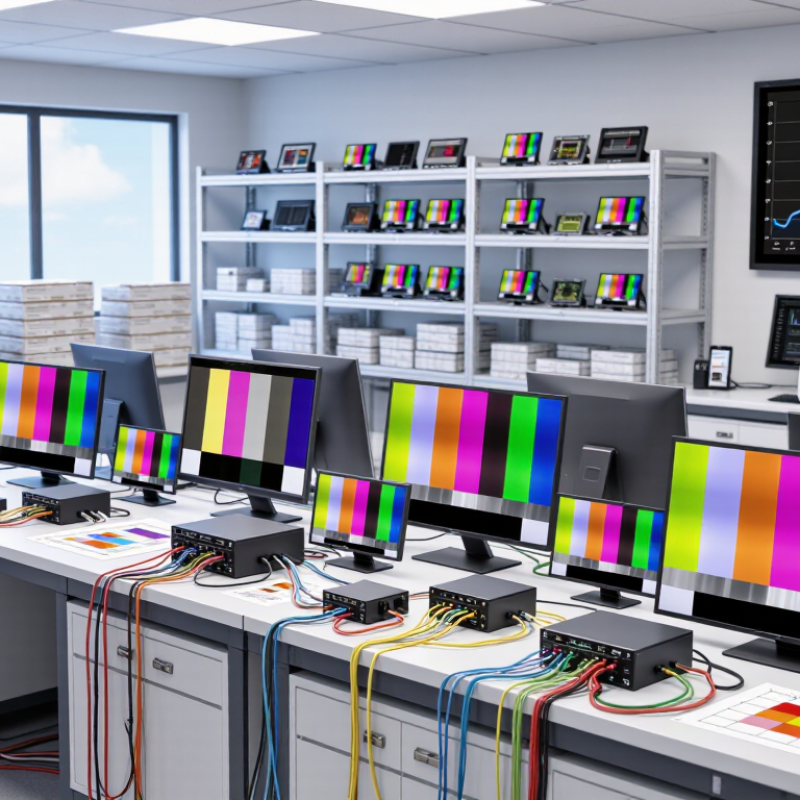
How to Find China Best TFT LCD Color Screen Supplier?
Define Your TFT LCD Color Screen Requirements
Before contacting a supplier, write a clear TFT LCD color screen specification. State the display size, resolution, aspect ratio, viewing direction, and color depth. Add brightness requirements for indoor or outdoor use. A screen near a window may need much higher brightness.
Define the interface carefully. Common options include RGB, LVDS, MIPI, and SPI. Confirm the connector position and cable length. Include touch functionality, cover glass thickness, and surface treatment if needed. Operating temperature also matters. A display used in a vehicle needs stronger thermal performance than one used indoors.
Think about the complete working environment. Will users wear gloves? Is sunlight reflection a concern? Does the screen need continuous operation for many hours? Provide housing dimensions and mounting-hole details. Even a small error can delay assembly.
Ask potential suppliers for datasheets, drawings, sample units, and test records. Check color consistency, dead pixels, viewing angles, and response time. Request an aging test under your expected conditions. Do not judge quality from one sample alone. That is a common sourcing mistake.
Your requirements may change after testing. This is normal. We once found that acceptable brightness created excessive power consumption in a compact enclosure. The specification needed revision. Leave room for practical adjustments, but record every change before mass production. A reliable supplier should explain technical limits clearly, not simply promise everything.
| Requirement | What to Define | Example Specification | What to Confirm with the Supplier |
|---|---|---|---|
| Display size and format | Active diagonal, aspect ratio, and overall module dimensions | 5.0-inch diagonal; 16:9 format; maximum outline dimensions defined in millimeters | Request a mechanical drawing showing the active area, bezel, mounting points, and tolerances. |
| Resolution and pixel arrangement | Pixel resolution, orientation, and pixel density needs | 800 × 480 pixels; landscape orientation | Check the datasheet for the native resolution, pixel pitch, and supported display orientation. |
| Display interface | Electrical interface and host-device compatibility | RGB, LVDS, MIPI DSI, or SPI, selected to match the host processor | Confirm pinout, signal levels, connector type, timing requirements, and initialization sequence. |
| Brightness | Required luminance for the operating environment | Approximately 300 cd/m² for many indoor applications; higher levels may be needed for bright environments | Ask for the specified and measured brightness, test conditions, and whether the value applies to the bare panel or complete module. |
| Viewing angle and image quality | Viewing direction, contrast, color consistency, and intended viewing distance | Wide-viewing-angle performance for applications where users view the screen from different positions | Review viewing-angle and contrast data from the datasheet; evaluate samples in the intended orientation. |
| Touch functionality | Whether touch is required and the touch technology needed | No touch, projected capacitive touch, or resistive touch | For touch versions, confirm cover-glass dimensions, controller interface, operating conditions, and integration details. |
| Operating environment | Operating and storage temperature, humidity, and exposure conditions | Define the required temperature range from the product’s real use environment | Check the module’s rated operating and storage ranges; confirm any special requirements for outdoor or industrial use. |
| Backlight and power | Backlight type, supply voltage, current, and brightness control method | LED backlight with a defined supply and PWM or other supported dimming method | Request backlight electrical limits, typical power consumption, connector details, and dimming guidance. |
| Mechanical integration | Module thickness, mounting method, connector location, and cable routing | Dimensions and mounting features matched to the enclosure design | Obtain a current mechanical drawing and verify clearance, cable bend space, and assembly tolerances. |
| Reliability and service life | Expected product life, operating hours, and acceptable performance changes | Set a project-specific backlight life target and evaluation criteria | Ask how life is defined and measured, including brightness-degradation criteria and test conditions. |
| Quality and compliance | Applicable quality controls, material requirements, and market regulations | Requirements based on the end product and the countries where it will be sold | Request relevant test reports or declarations and clarify which component or finished product each document covers. |
| Samples and validation | Sample quantity, evaluation schedule, and acceptance criteria | Test samples in the actual enclosure and under representative operating conditions | Agree on sample configuration, inspection items, firmware or driver support, and the process for resolving issues. |
| Production and supply | Forecast volume, order quantities, lead time, and product-change notification needs | Provide an estimated annual demand and expected order schedule | Confirm current availability, minimum order quantity, replenishment lead time, and advance notice for design changes. |
Note: Example values are starting points for a requirements discussion, not universal recommendations. Confirm final specifications against the application, current datasheet, and tested samples.
List screen size, resolution, aspect ratio, viewing direction, brightness, and color depth. Include interface, connector position, cable length, and mounting holes.
Match brightness to the setting. A screen beside a sunny window may need more brightness than an indoor display. Check operating temperatures for the intended environment.
Compare at least three suppliers using the same requirements. Review sample quality, lead time, order quantity, packaging, and written defect-handling terms.
No. Request samples, drawings, test records, and production evidence. Check color consistency, dead pixels, viewing angles, and response time.
Test several samples under realistic conditions, such as bright light and low temperatures. Check continuous operation and repeated connections. One sample isn’t enough.
Check that company details match the quotation and payment information. Request audit records and quality certificates. When practical, inspect the factory or arrange a live video tour.
Ask about monthly capacity, current orders, inspection steps, lead times, packaging, and replacement terms. A pilot order can reveal problems early.
Revise the specification and record every change before production. I once found that higher brightness used too much power in a compact enclosure. It happens.
Finding the best China Tft Lcd Color Screen supplier begins with clearly defining your project requirements, including screen size, resolution, brightness, viewing angle, interface, operating environment, and expected order volume. Once these specifications are established, research and compare potential suppliers based on their manufacturing experience, communication efficiency, technical capabilities, and ability to provide tailored solutions. A reliable supplier should be able to explain its display technology, customization options, materials, and testing procedures in a clear and professional manner.
Before making a decision, verify the supplier’s credentials, request samples, and assess its production capacity to ensure consistent quality and stable delivery. Compare quotations carefully by considering not only unit price but also quality control, warranty support, packaging, payment conditions, lead time, and shipping terms. The ideal partner should offer a balanced combination of dependable display performance, flexible customization, transparent cooperation, and reasonable total cost, helping your project achieve long-term reliability and efficient supply management.

 Xunrui Display