Choosing the right display for 2026 requires more than comparing prices or brightness ratings. A reliable Tft Resistive Screen must match the environment, user behavior, and expected service life. Factory floors, medical carts, retail kiosks, and vehicle controls all create different demands. Dust, moisture, gloves, stylus input, and repeated pressing can change the buying decision.
Geoff Walker, a longtime touch-technology consultant, has stated, “There is no one-size-fits-all touch technology.” That observation remains important when evaluating leading TFT resistive screens. Four-wire and five-wire designs offer different durability profiles. Surface coatings affect glare, scratch resistance, and cleaning performance. The TFT panel itself determines viewing angle, color consistency, and readability under strong lighting. Small differences become obvious beside a warehouse window or beneath a surgical lamp.
Real-world testing matters.
This guide examines the top Tft Resistive Screen options for 2026 through practical criteria. We consider touch accuracy, pressure response, optical clarity, operating temperature, interface compatibility, and long-term reliability. We also examine weaknesses that product pages often hide. A screen may support a gloved hand but lose clarity after aggressive cleaning. Another may look bright indoors yet struggle under direct sunlight. These details are easy to overlook.
The ranking is not absolute. Application priorities can overturn it. A budget kiosk needs different strengths from an industrial controller. That is where this comparison becomes useful, though not flawless. Specifications provide direction, but hands-on validation remains essential before large-scale deployment.
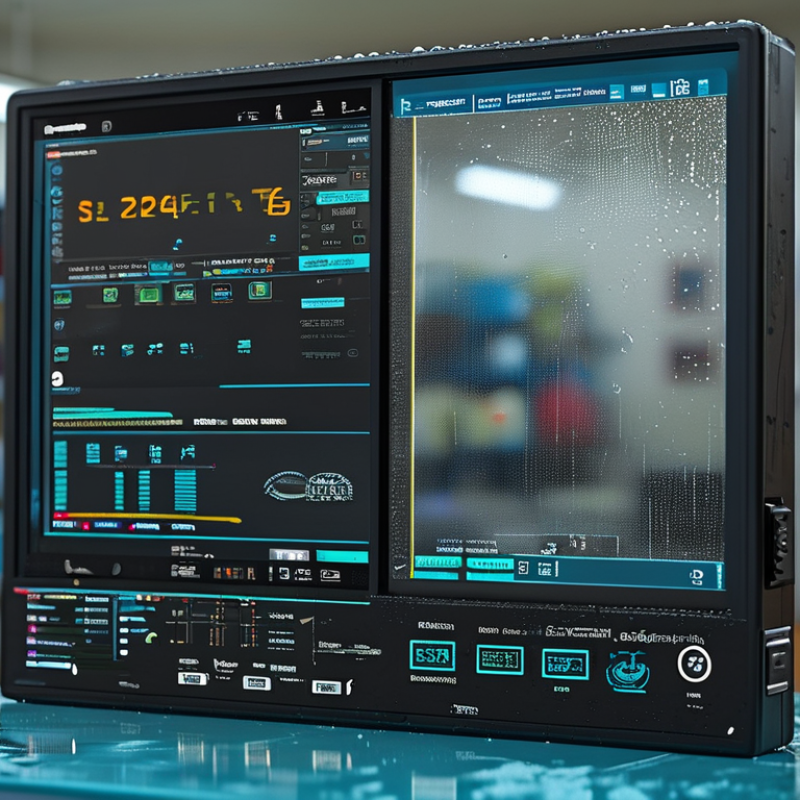
TFT resistive screens combine a thin-film transistor display with pressure-sensitive touch layers. The TFT panel creates bright, controlled images with defined pixels. The resistive layer detects touch when two conductive sheets meet under pressure. A finger, gloved hand, plastic stylus, or pen tip can activate it.
A typical screen uses a flexible upper film and a stable lower glass layer. Tiny spacers keep them apart during normal use. Pressing the surface changes the electrical field, and the controller calculates the touch position. This mechanism feels slightly softer than capacitive glass. It also works reliably near dust, moisture, and industrial gloves.
For 2026, strong TFT resistive screens should offer clear viewing angles, durable surface coatings, and accurate calibration. Bright backlighting matters in vehicle panels and outdoor instruments. Sealed construction helps in kitchens, workshops, and medical environments. However, higher brightness can increase heat and energy use. That trade-off deserves testing.
Screen size is not everything. A compact panel with stable touch accuracy may outperform a larger, cheaper unit. I have found that thick gloves can still require deliberate pressure. This is easy to overlook. Designers should test real tools, wet fingers, repeated presses, and temperature changes before choosing a display. Multi-touch performance may also be limited, depending on the controller and layer design.
A TFT resistive screen combines a thin-film-transistor display with a pressure-sensitive touch overlay. When a user presses the flexible top layer, it contacts the lower conductive layer and changes the electrical resistance at the touch point. A controller converts that change into X/Y coordinates. Resistive technology works with fingers, gloves, and passive styluses.
The chart compares representative published industry values for the typical active-touch life of common resistive architectures. Five-wire designs generally provide the highest durability because the sensing electrodes remain on the rigid substrate, while four-wire and eight-wire designs typically offer around one million actuations. Actual performance varies with construction, pressure, environmental conditions, and controller settings.
In 2026, TFT resistive screens should be judged by working conditions, not headline resolution. Glove support remains essential. A reliable five-wire touch layer can also handle stylus input, dust, and repeated presses. That matters on factory panels and medical carts. Grand View Research valued the global touchscreen market at approximately USD 76 billion in 2023, showing strong demand across commercial equipment. However, that figure covers several touch technologies, not resistive screens alone.
Outdoor readability deserves closer attention. Look for high brightness, wide viewing angles, anti-glare treatment, and optical bonding. These features reduce reflections under warehouse lighting or direct sunlight. MarketsandMarkets forecasts the industrial display market to reach about USD 9 billion by 2028, with rugged visibility remaining a practical buying concern. Temperature tolerance is equally important. A screen rated around -20°C to 70°C suits many field applications, but the exact range must match the equipment enclosure.
Ingress protection, touch durability, controller compatibility, and long-term component availability can matter more than ultra-high pixels. IEC 60529 testing helps verify protection claims, although certification details still require inspection. I have seen specifications look impressive while the touch response weakens through thick gloves. That is an uncomfortable limitation. Buyers should test the complete assembly, including cable length, cover glass, mounting pressure, and calibration stability. A slightly slower panel may prove more dependable in daily operation.
For 2026, top TFT resistive screens differ less by appearance than by touch behavior, image quality, and operating conditions. A standard four-wire design can provide accurate input at a lower cost, but its sensing layer may wear faster under repeated pressing. Five-wire technology usually offers better durability and stable calibration, especially in kiosks, factory panels, and medical equipment. Projected capacitive screens may look sharper, yet resistive models remain more practical for gloves, plastic styluses, and wet fingertips.
Comparison should include more than resolution. Look for sunlight readability, viewing angle, response speed, surface hardness, and controller compatibility. An 800 × 480 panel may perform reliably in a simple control unit, while a 1280 × 800 panel suits detailed menus and compact dashboards. Optical bonding can reduce reflections, but it may increase replacement costs. I have seen specifications appear impressive until glare, thick gloves, or poor calibration exposed weaknesses. That part deserves more attention.
Tips: Test the screen with the actual gloves, stylus, and enclosure before purchase. Check whether calibration remains accurate near the edges. Confirm the operating temperature range and expected press cycles. For dusty workshops, sealed construction matters more than decorative brightness. Also, do not assume a higher pixel count means better usability. Small buttons can frustrate operators, even on a clear display.
TFT resistive screens are used in 2026 where controlled input, durability, and clear visual feedback matter more than gesture support. Industrial machines remain a strong application. Operators can press buttons with gloves, styluses, or dusty fingers. Factory panels often face vibration, oil mist, and repeated contact. A resistive layer can be practical there, especially when the interface uses large, clearly separated controls.
Medical equipment also uses these displays in patient monitors, portable diagnostic devices, and treatment consoles. Staff may need accurate input through gloves. However, screen hygiene and pressure sensitivity require careful design. A poorly tuned interface can cause missed commands. That issue deserves more attention. Retail terminals, self-service kiosks, ticket machines, and restaurant ordering stations use TFT resistive screens when users need simple, deliberate selections. Their lower power demand can also support compact systems operating for long hours.
Outdoor control panels and vehicle service equipment benefit from bright TFT panels paired with resistive input. Rain, work gloves, and uneven temperatures can make purely touch-based interaction unreliable. In warehouses, handheld terminals may use these screens for barcode workflows and inventory checks. They are also found in laboratory instruments, access-control stations, and legacy equipment upgrades. Still, resistive screens are not the best choice for every 2026 product. They usually offer weaker multitouch performance and may need firmer presses than projected-capacitive designs. Engineers should test glare, viewing angles, glove materials, and expected touch cycles before selecting a screen. Field testing remains essential.
Choosing the right TFT resistive screen starts with the operating environment, not the resolution. A 5-wire panel suits kiosks, industrial terminals, and medical interfaces because it accepts gloved, stylus, or bare-finger input. It also tolerates light surface contamination better than many projected-capacitive designs. I usually check the required activation force, touch-life rating, viewing angle, and optical bonding method. A bright factory floor may require at least 500–1,000 cd/m², while an enclosed controller needs far less. The backlight must also survive the target temperature range. IEC 60068 environmental testing can help verify vibration, humidity, and thermal performance.
Cost matters, but replacement labor matters more. MarketsandMarkets’ 2024 touch-screen market report projects continued growth through 2029, driven by industrial, automotive, and healthcare applications. Its figures support long-term demand, but they do not guarantee one panel will fit every machine. That is where selection becomes practical. Match the TFT resolution to the software interface, then test icons with gloves and a metal stylus. Check USB, serial, or embedded controller compatibility before ordering samples. A 4-wire design may reduce cost, while a 5-wire design usually offers better durability. I have seen teams overvalue pixel density and undervalue glare. That mistake is easy to repeat. Review the supplier’s IEC 60068 results, touch-cycle data, viewing tests, and production tolerances. Published claims remain starting points, not proof. Run a pilot in real light, dust, temperature, and workflow conditions.
: Four-wire screens usually cost less. Five-wire screens often provide better durability and stable calibration. Four-wire sensing layers may wear faster during repeated pressing. The better choice depends on expected touch cycles.
They accept input from gloves, plastic styluses, and wet fingertips. This suits factory panels, kiosks, and medical equipment. They also tolerate light surface contamination reasonably well. Not every dirty environment is harmless.
No. An 800 × 480 panel may suit a simple control unit. A 1280 × 800 panel fits detailed menus and compact dashboards. Tiny buttons can remain frustrating, even on a sharp display.
Bright factory floors may require 500–1,000 cd/m². Enclosed controllers usually need less brightness. Sunlight readability and glare matter more than resolution alone. A bright screen can still perform poorly under reflections.
Test the actual gloves, stylus, and enclosure. Check accuracy near the screen edges. Measure response speed and required activation force. A sample can look excellent, then fail during real operation.
Optical bonding can reduce reflections and improve viewing clarity. It may also increase replacement costs. Consider repair access before choosing it. The clearer option is not always the cheaper option.
Check temperature, humidity, vibration, dust, and expected press cycles. Sealed construction matters in dusty workshops. Environmental test results can support the supplier’s claims. Still, published data is only a starting point.
Confirm USB, serial, or embedded controller compatibility before ordering samples. The screen must match the software interface and enclosure. Test icons with gloves and a metal stylus. Compatibility problems can appear late.
Tft Resistive Screen technology remains a practical display solution for 2026, combining a TFT panel’s clear image quality with resistive touch input that responds to fingers, gloves, and most styluses. Its operation is based on pressure: two conductive layers make contact when touched, allowing the system to identify the touch position. This design is valued for reliable operation, simple integration, and consistent performance in demanding environments.
When comparing the top TFT resistive screens, important factors include display brightness, resolution, touch sensitivity, durability, viewing angle, response time, power use, and resistance to dust or moisture. These screens are suitable for industrial control panels, medical equipment, retail terminals, transportation systems, educational devices, and outdoor instruments. Choosing the right model requires evaluating the working environment, expected touch method, screen size, interface requirements, mounting space, maintenance needs, and overall budget. A balanced selection can deliver dependable performance and long service life.

Xunrui Display