Why Choose a TFT Display Module for Your Product?
A product display is more than a bright window. It is where users read instructions, check measurements, and make decisions. Choosing the right Tft Display Module can therefore influence usability, reliability, and perceived product value.
A TFT Display Module uses thin-film transistor technology to control individual pixels with precision. It can deliver sharp text, stable colors, and responsive images across many embedded applications. Engineers commonly select TFT modules for medical instruments, industrial controllers, smart appliances, and portable equipment. The practical reasons are clear. These modules support structured interfaces, touch integration, backlighting, and flexible communication options.
Ross Young, a respected display-industry analyst, has emphasized that “display quality remains a key differentiator in consumer electronics.” That observation also applies to professional products. A readable screen can reduce mistakes beside a noisy production line. A wide viewing angle helps when an operator stands away from the panel. Strong brightness improves visibility under factory lighting.
Details matter. A 4.3-inch module may suit a compact controller, while a 10.1-inch panel offers more room for charts and status alerts. Engineers must also examine operating temperature, connector placement, controller compatibility, lifetime, and supply stability. A beautiful prototype can still fail in the field.
No module is perfect.
Power consumption may rise with brightness. Touch performance can change with gloves or moisture. Engineers sometimes focus too heavily on resolution and overlook mounting depth. That is a costly lesson.
The best choice balances image quality, environmental demands, interface requirements, and long-term availability. Testing should happen on real hardware, not only on a specification sheet. A reliable Tft Display Module should make the product easier to understand, safer to operate, and more credible in daily use.
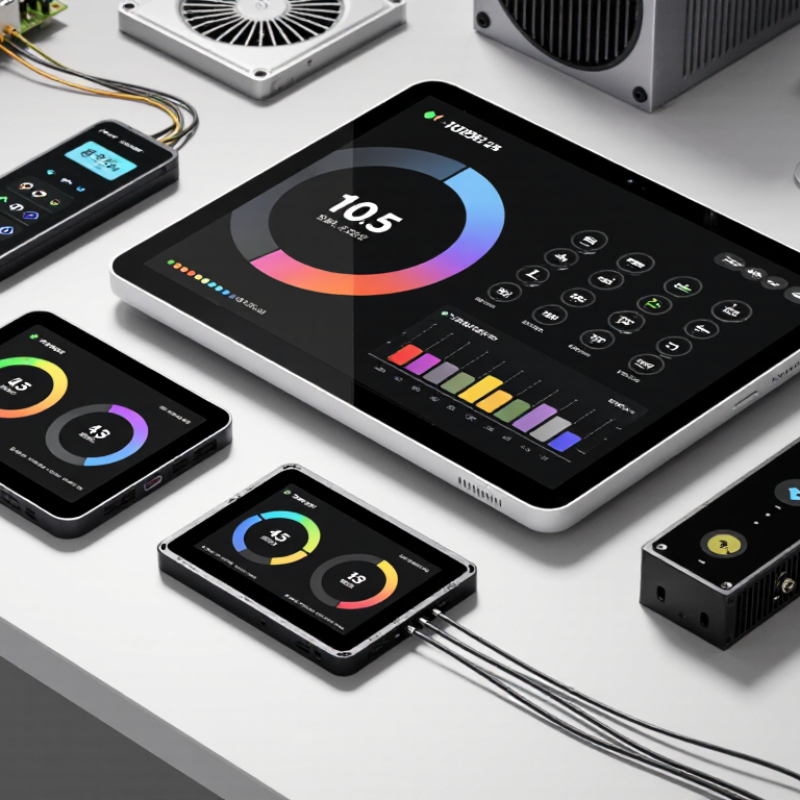
A TFT display module is a compact screen assembly built around thin-film transistor technology. Each pixel uses a transistor to control light and color more precisely. This creates sharper images than many basic passive displays. The module usually includes a TFT panel, backlight, driver circuit, glass layers, and a connection interface.
Some modules also include a touch panel, protective cover, or mounting frame. The interface may use SPI, RGB, or MIPI signals, depending on the product’s speed and processing needs. Engineers should check resolution, active area, brightness, viewing angle, operating temperature, and connector position. A bright screen may improve outdoor readability, but it can increase power use. More detail is not always better.
Tips: Test the actual module with your target controller. Datasheet values may not show glare, color shifts, or slow response in real conditions. Check the screen under sunlight, low light, and different viewing angles. Leave space for cables and mechanical tolerances. A common mistake is choosing by size alone. Power limits, software compatibility, and long-term availability matter too. Even experienced teams can overlook installation pressure or uneven backlight performance.
It is a compact screen assembly using thin-film transistors to control individual pixels. It usually includes a panel, backlight, driver circuit, glass layers, and connector. Some modules add touch sensing or protective glass.
Each pixel contains red, green, and blue subpixels. Electrical signals change liquid crystal alignment and control transmitted light. A timing controller scans rows while column signals set pixel brightness. This process repeats many times each second.
Check resolution, active area, brightness, viewing angle, temperature range, and connector position. Also confirm power limits and software compatibility. Size alone is not enough. That choice often causes trouble.
No. Higher brightness can improve daylight readability but increase power use and heat. A bright backlight may still suffer from reflections. Test the screen under direct sunlight and indoor lighting. Glare can change the result.
SPI suits compact screens with modest graphics requirements. RGB or MIPI interfaces usually support faster image updates. Confirm voltage levels, cable length, connector direction, and controller compatibility. Do this before designing the circuit board.
Test the mounted display from different horizontal and vertical positions. Do not judge it only while holding the module in your hand. Check color shifts, brightness loss, and readability. Small angle changes matter.
Test thermal cycling, vibration, humidity, repeated touch input, and long-duration operation. Repeat power cycles as well. Use the final housing during testing. Airflow can change internal temperature significantly.
Leave room for cables, connector movement, bending, and installation tolerances. Avoid excessive pressure on the glass or uneven backlight areas. A module may fit the drawing but fail during assembly. That happens more often than expected.
Not necessarily. Higher resolution can increase cost, processing demand, and power consumption. Compare image detail with viewing distance and application needs. A lower-resolution screen may perform better overall. More detail is not always better.
Test the actual module with the target controller and final enclosure. Review brightness, glare, color response, touch accuracy, and cable clearance. Check sunlight, low light, and extended operation. Datasheet values may not tell the whole story.
A Tft Display Module is an integrated screen solution that combines a thin-film transistor panel with essential components such as a backlight, driver circuitry, and interface connections. It produces clear, bright, and responsive images by controlling individual pixels, making it suitable for displaying text, graphics, video, and real-time data. Compared with simpler display technologies, TFT modules offer better color performance, higher resolution, wider viewing options, and flexible screen sizes for modern product designs.
When selecting the right module, designers should consider display size, resolution, brightness, viewing angle, touch functionality, operating temperature, power consumption, and communication interface. Mechanical dimensions, mounting method, connector placement, and software compatibility are also important for smooth integration. Tft Display Module solutions can be used in control panels, measuring instruments, consumer electronics, transportation equipment, medical devices, and industrial systems. Careful evaluation of the application environment and user requirements helps ensure reliable performance, efficient development, and a consistent visual experience.

 Xunrui Display