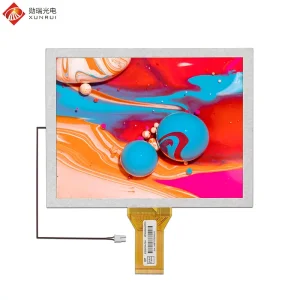
Explore our core custom-manufactured liquid crystal display modules. Engineering support, low latency interface integration, and robust build options available directly from our Shenzhen production lines.
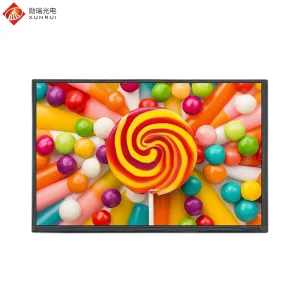
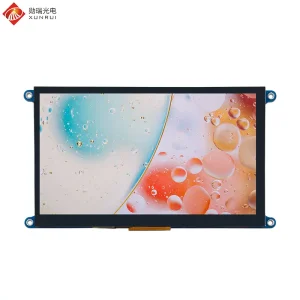
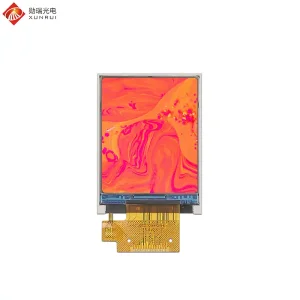
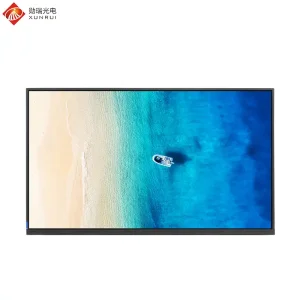
An in-depth technical analysis for hardware engineers, industrial product managers, and procurement leads.
In B2B industrial design, the 8-inch display category sits at a critical intersection of spatial efficiency and rich human-machine interface (HMI) visualization. Unlike smaller mobile displays, the 8-inch landscape provides adequate screen real estate for complex diagnostic charts, multi-variable control grids, and high-resolution numeric indicators. It acts as the standard console sizing for industrial machinery, handheld military testers, and medical bedside telemetry systems.
Customization at this scale requires precise attention to electrical noise margins, thermal dissipation, and backlight longevity. When sourcing custom 8-inch liquid crystal modules, engineering panels must choose between TN (Twisted Nematic) and IPS (In-Plane Switching) display matrices, each optimizing different balances of cost, viewing angle ranges, and chromatic accuracy.
Hardware developers looking for custom 8-inch TFT LCD manufacturers are rarely searching for off-the-shelf catalog parts. The search intent is focused on finding partners capable of solving technical integration bottlenecks. The key configurations needed include:
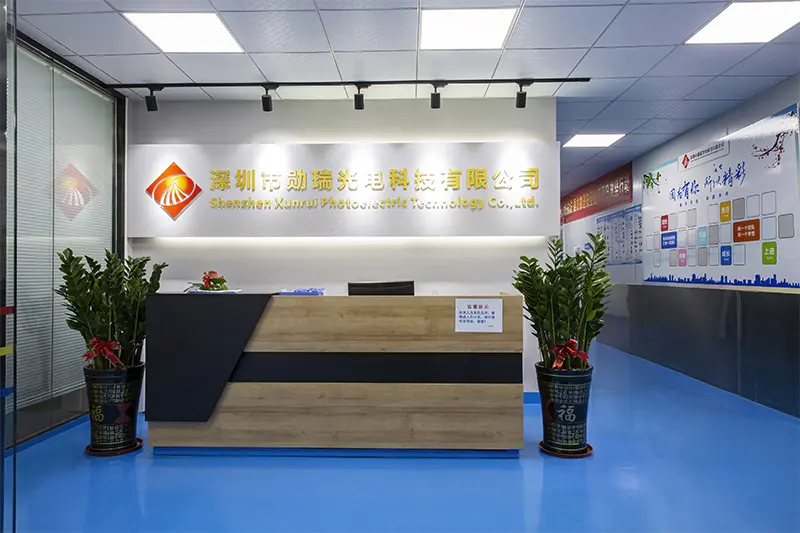
Founded in 2016, Shenzhen Xunrui Optoelectronics Technology Co., Ltd. is a high-tech enterprise specializing in the R&D, production, sales, and service of advanced liquid crystal modules. Our engineering-driven approach focuses on customized and differentiated display systems.
By investing over 30% of net profits back into product R&D annually, we ensure that our manufacturing lines implement the latest microelectronic packaging technologies (COF, COG) and optical enhancement techniques. Xunrui's corporate mission is defined by craftsmanship, virtuous character, and win-win partnerships, supported by a rigorous Quality Policy of full participation, meticulous research, and sincere service.
How Xunrui Optoelectronics configures standard display architecture to survive challenging physical environments and electrical constraints.
We modify FPC length, trace shielding, and routing layout. We support custom pin-mapping to match legacy board designs and offer gold-plated connection fingers for reliable signal integrity in high-vibration applications.
We offer projected capacitive touch (PCAP) with I2C/USB interfaces, and analog resistive touch (4-wire/5-wire) configurations. We provide chemical strengthening (up to 7H cover glass), anti-glare (AG), anti-reflective (AR), and anti-fingerprint (AF) surface treatments.
Our solutions range from 250 nits for indoor applications to 1000+ nits for outdoor readability. We utilize high-efficiency LED drivers to manage operating temperatures and prevent thermal breakdown behind the LCD matrix.
We supply turnkey controller systems converting digital source signals to panel-native interfaces. We support AV, VGA, HDMI, and LVDS, with components optimized for high signal isolation and low power consumption.
Sourcing display electronics from Shenzhen offers advantages beyond raw component cost. The region provides access to a comprehensive optoelectronics ecosystem.
Shenzhen consolidates display glass fabrication (TFT backplanes), LED array manufacturing, specialized optical film processing (diffusers, polarizers), and silicon packaging within a tight geographic radius. This supply chain proximity enables fast prototyping loops and flexible volume scaling.
At Xunrui Optoelectronics, we leverage this industrial ecosystem to manage lead times, from initial CAD layout to FOG (Flex on Glass) bonding and final optical validation. Our production capacity handles small, high-mix custom batches starting from 1 unit up to large production runs of 2 million units per month.
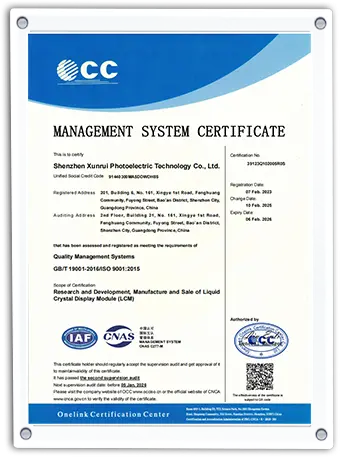
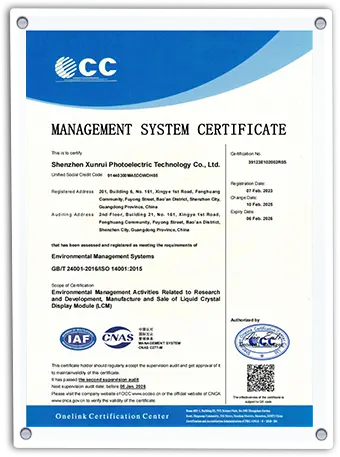
Exporting industrial displays to North American, European, and Asia-Pacific markets requires strict adherence to international safety and environmental regulations. Xunrui monitors and aligns production with global standards:
A structured breakdown of our testing procedures, engineered to ensure high reliability across our custom product lines.
One Guarantee: Comprehensive customer service backed by a dedicated 24-hour engineering support team.
Two Microscopic Examinations: FOG lamination microscopy verifies anisotropic conductive film (ACF) particle distribution, while backlight welding microscopy checks solder joint integrity.
Three-Stage Aging: Electrical connection aging at the FOG level, high-temperature thermal baking for FOG assemblies, and power-on burn-in testing for finished display units.
Four Physical Experiments: Environmental testing in high-temperature/high-humidity chambers, thermal shock profiling, vibration testing, and physical drop validation.
Our panels go through five separate verification stages:
Xunrui's custom 8-inch displays are configured for demanding operational environments across diverse industry sectors.
Factory floors require control terminals that withstand dust, moisture, and electrical noise. Our 8-inch displays, fitted with custom driver boards (supporting LVDS/RGB) and thick cover-glass touch systems, provide stable interfaces for CNC equipment, robotics control stations, and chemical mixing panels.
Medical instruments require high color accuracy and reliable performance. Our displays are used in portable ventilators, bedside monitors, and diagnostic systems, offering stable backlight curves and high-contrast IPS panels for accurate medical imaging visualization.
In-vehicle systems operate across wide temperature variations. Xunrui's wide-temperature LCD panels are designed to perform reliably under direct sunlight and freezing conditions, serving as instrument clusters, fleet navigation consoles, and rugged terminal monitors.
Key technological shifts for display hardware planners to consider in their long-term designs.
Air-bonding displays (securing the touch panel to the LCD via perimeter tape) leaves an internal air gap. This air gap can cause internal reflections, reducing display readability in high-ambient-light environments. Industry designs are shifting toward full optical bonding (using OCA or OCR adhesives) to fill this gap.
Optical bonding eliminates internal reflections, improves mechanical drop strength, and prevents condensation or dust ingress between layers. This processing step is essential for outdoor handheld devices, marine consoles, and military field gear.
Traditional industrial architectures relied on Parallel RGB and LVDS interfaces for sub-10-inch displays. As modern application processors adopt high-speed mobile interfaces, custom 8-inch TFT panels are increasingly configured with MIPI DSI (Display Serial Interface).
MIPI DSI interfaces support higher resolutions (such as 1280x800 or 1920x1200) with fewer high-frequency signal lines, reducing EMI emissions and board complexity. Xunrui assists customers through this interface transition with custom-configured adapter and driver boards.
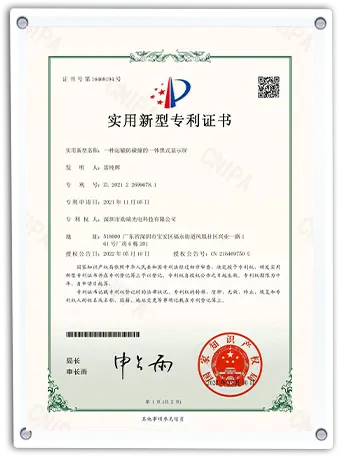
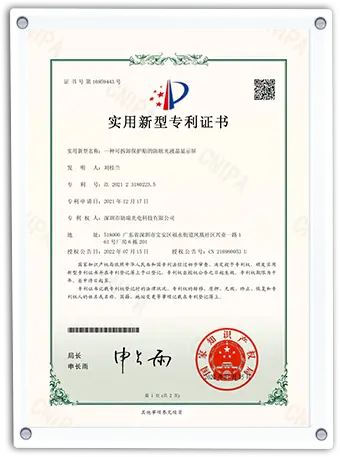
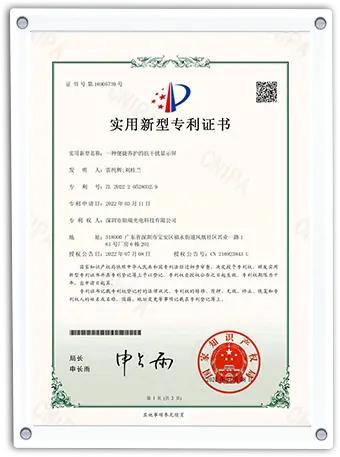
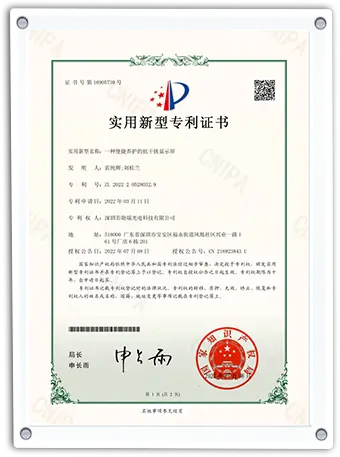
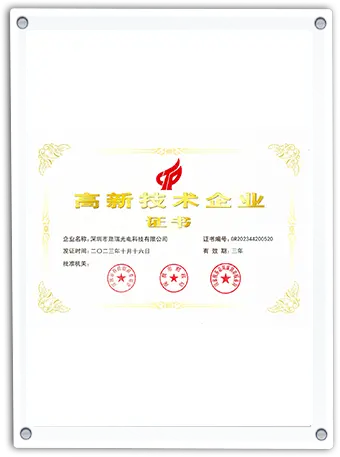
Shenzhen Xunrui Optoelectronics is a validated high-tech manufacturing partner, operating cleanroom assembly lines under documented quality protocols.
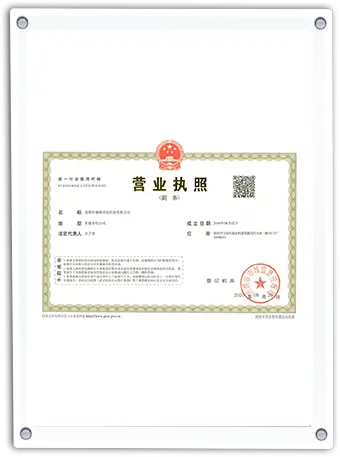
Practical answers to technical questions commonly raised by system designers, sourcing specialists, and engineers.
Non-Recurring Engineering (NRE) costs vary based on customization requirements. Creating a custom FPC layout typically requires a small tooling charge ($300 to $800), while a custom backlight or projected capacitive touch glass cover mold ranges from $1,500 to $5,000 depending on dimensions and thickness. Custom FPC and panel sample lead times average 3 to 4 weeks, with production runs completed in 4 to 6 weeks after sample sign-off.
Industrial customers require long-term availability. Xunrui guarantees a minimum supply lifecycle of 5 to 7 years for our core custom TFT modules. In the event of an LCD glass panel or driver IC end-of-life (EOL) announcement by our sub-tier suppliers, we provide a minimum of 6 months' advance notice, offer last-time buy options, and design drop-in replacements to maintain form, fit, and function continuity.
IPS (In-Plane Switching) offers wide viewing angles (typically 85/85/85/85 degrees all around) and stable color reproduction, making it suitable for multi-user monitoring systems and medical screens. TN (Twisted Nematic) displays are more cost-effective and provide faster pixel response times, but have limited viewing angles (especially at 12 or 6 o'clock orientation, where color inversion occurs). We assist hardware engineers in selecting the optimal configuration based on budget and physical viewing requirements.
Yes. We support prototyping and small batches. For our standard display form factors, we support small-batch initial orders with a minimum order quantity (MOQ) of 1 unit. This enables engineering teams to evaluate physical panels and drivers before scaling up production. Custom tooling projects require individual evaluation, with volume MOQs adjusted based on components.
Optical bonding bonds the LCD cell and touch cover glass together using an optical-grade liquid adhesive (OCR) or dry adhesive film (OCA). This process eliminates the air layer between the display and the touch glass. The benefits include reduced light reflection (from ~8% down to less than 1%), improved contrast, higher structural resistance to impacts, and the prevention of dust or moisture ingress inside the screen layers.
We configure Projected Capacitive (PCAP) touch sensors using controllers like Goodix, FocalTech, or Ilitek. This configuration supports multi-touch, glove operation, water-rejection tracking, and custom cover-lens thickness (up to 6mm). For high-noise electrical environments or legacy controller architectures, we offer analog 4-wire and 5-wire resistive touch panels.
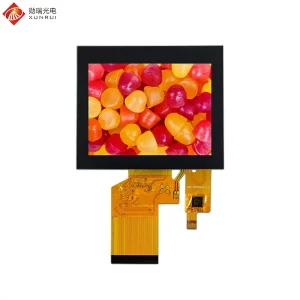
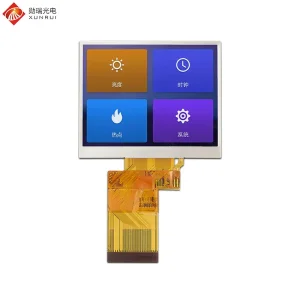
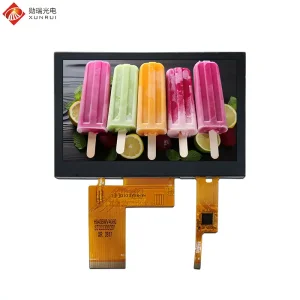
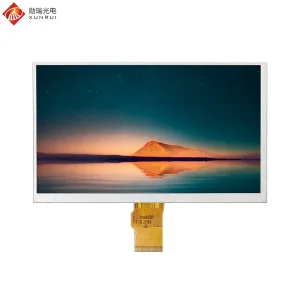
Explore our wider range of liquid crystal modules, ranging from small-format SPI screens to mid-size industrial and high-brightness panels.
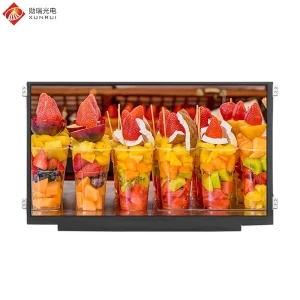
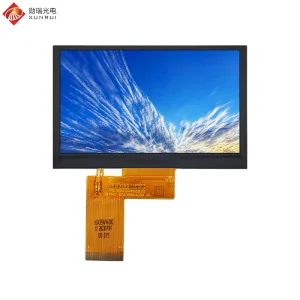
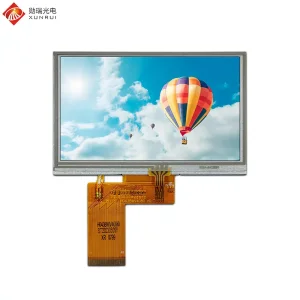
 Xunrui Display