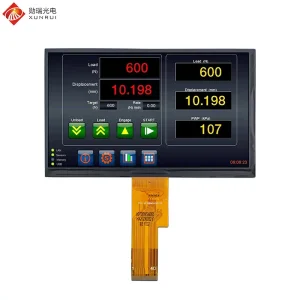
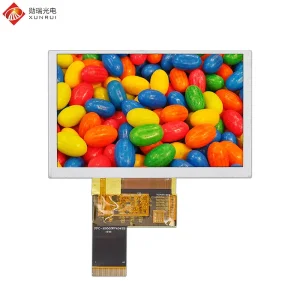
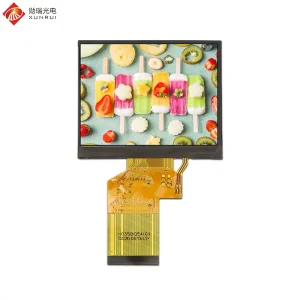
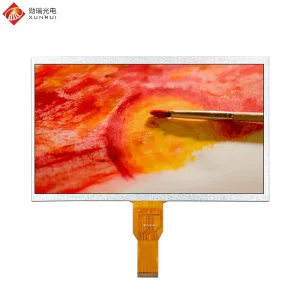
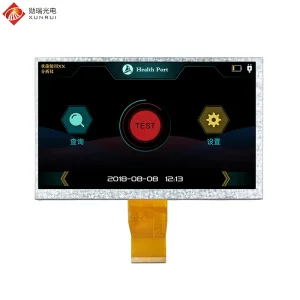
Engineered for maximum visibility under high-altitude equatorial sunlight, customized for Rwandan smart infrastructure initiatives.
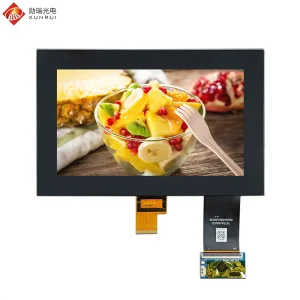
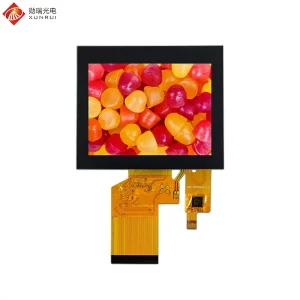
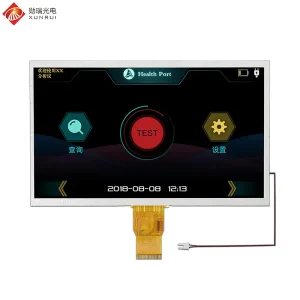
Driving technological growth in Kigali Innovation City and across the East African Community (EAC).
Rwanda's geographic positioning results in high ambient light levels and strong direct solar radiation. Standard consumer-grade screens become unreadable due to surface glare. Xunrui's high-brightness TFT LCDs (from 900nits to over 1300nits) utilize advanced optical stacking and light-guide plates to maintain perfect legibility under direct equatorial sunlight.
As Kigali expands its Smart Bus Shelter project and introduces intelligent parking management, rugged public displays must operate continuously. Our custom capacitive touch panels are designed to work in varying outdoor weather, including extreme seasonal rains and humid mornings, and resist vandalism through impact-resistant protective cover glass.
Many hardware integrations in rural Rwanda rely on solar energy and local batteries. Our TFT LCD designs optimize backlighting efficiency, using custom-designed LED driver boards that draw minimal wattage relative to brightness output. This low-power consumption makes them ideal for remote IoT monitoring systems, telecommunication agent kiosks, and off-grid agritech tools.
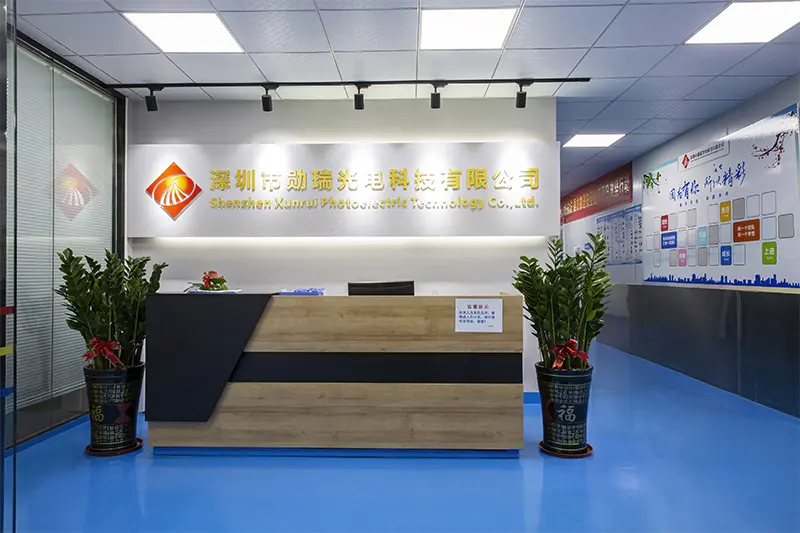
Founded in 2016, Xunrui Optoelectronics is a high-tech manufacturer specializing in the research, design, production, and supply of premium liquid crystal display modules. We have grown to support global clients who require specialized, high-reliability displays capable of operating in demanding thermal and environmental settings.
We allocate more than 30% of our annual net profit to continuous research and development, allowing us to pioneer custom backlight engineering, optical bonding processes, and durability testing frameworks. Our team provides specialized consulting for engineering firms looking to integrate displays in demanding environments like sub-Saharan Africa.
Tailored display designs to meet specific sizing, electrical, and interface requirements.
Our production covers display sizes from 0.96 inch up to 27 inches, with standard and customized options available for multiple key dimensions:
With a strong background in display engineering, we adapt optical characteristics for specific end-use environments. Over 60% of our products are customized to match client structural parameters. For example, we optimize screen backlights for outdoor placement and select touch sensors designed to minimize false inputs in high-humidity climates.
Our core sizes include 1.8", 2.1", 3.5", 4.3", 5", 5.5", 7", 8", 9", 10.1", 11.6", 13.3", and 15.6" modules. We serve applications in smart metering, agritech mobile devices, public bus kiosks, outdoor commercial displays, industrial controls, banking terminals, and healthcare equipment.
We manage the process from design and component sourcing to optical bonding, touch screen lamination, and final validation.
Automatic cleaning, high-speed FOG bonding machines, and COG assembly cleanrooms ensure stable yield rates.
Our quality control processes ensure that each display meets target specifications before dispatch.
We provide a dedicated technical support system, including rapid assistance for integration questions and direct communication with engineering staff.
FOG bonding lamination and backlight welding are inspected microscopically to prevent trace connection flaws that can emerge during long-term field deployment.
All panels undergo electrical connection aging at the FOG level, high-temperature chamber baking, and final functional aging of completed display modules.
To certify outdoor durability, modules are tested in our environmental lab:
Quality inspections occur across multiple production phases:
Aligning manufacturing standards with international projects to support long-term hardware deployments.
Building reliable display hardware through focused engineering, enabling our integration partners to deliver robust field systems.
Applying strict quality controls at each step of development and manufacturing to ensure consistent, repeatable display performance.
Focusing on custom hardware engineering, responsive communication, and supporting projects from early prototype stages through volume production.
A comprehensive range of high-brightness IPS and TN panels optimized for outdoor use in Rwanda and East Africa.
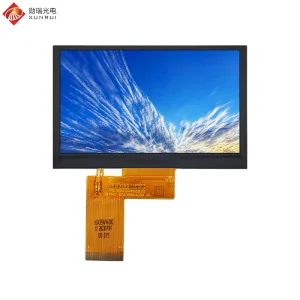
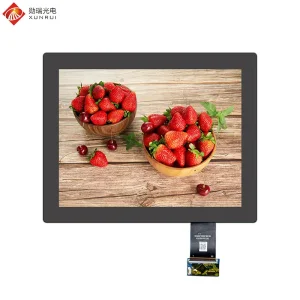
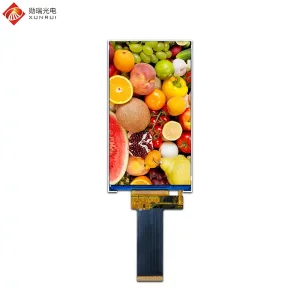
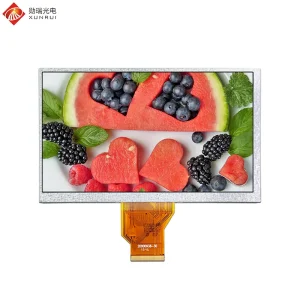
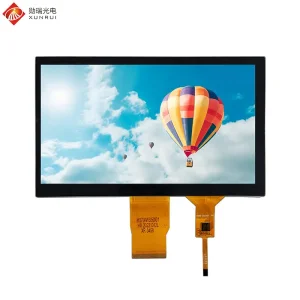
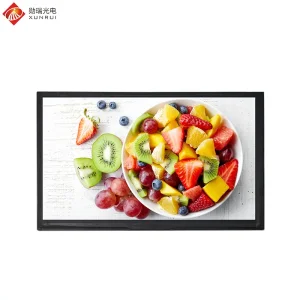
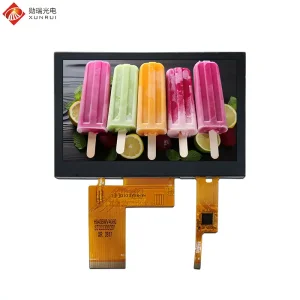
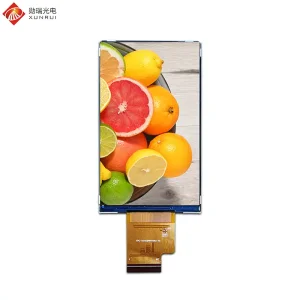
Technical guidance to assist in selecting the appropriate display technology for local projects.
| Parameter | TN TFT Display Technology | IPS TFT Display Technology | Xunrui Optimization Advantage |
|---|---|---|---|
| Viewing Angle | 6 o'clock or 12 o'clock (Limited viewing cone) | All-direction free viewing (85°/85°/85°/85°) | IPS modules maintain color fidelity without inversion. |
| Luminance Levels | 800 to 1300 nits (Typical) | 900 to 1500+ nits (Available) | Optimized LED configuration delivers high brightness with reduced power draw. |
| Thermal Behavior | Susceptible to temporary blackouts at extreme temperatures | High liquid crystal clearing temperature (up to 110°C) | Suitable for sealed enclosures exposed to direct solar heating. |
| Touch Lamination | Supported (Resistive & Capacitive) | Supported (Full Optical Lamination available) | Optional OCA/LOCA bonding eliminates internal reflections. |
| Typical Uses | Cost-sensitive fixed-angle terminals | Public kiosks, handheld agritech, outdoor medical displays | Broad interface options (LVDS, MIPI, RGB) simplify design integration. |
Facilitating import, regulatory compliance, and post-sale technical support for East African clients.
We provide complete documentation for Rwandan customs clearance, including HS Codes (typically 8528.59 for LCD modules), Certificates of Origin, and packing lists to support processing at the Kigali International Airport (KGL) or transit via Dar es Salaam/Mombasa ports.
All display modules manufactured by Xunrui are compliant with European and international standards, including CE, RoHS, and FCC. Material testing reports can be supplied to verify compliance with local industrial import requirements.
We support small-batch development requirements by offering a minimum order quantity (MOQ) of 1 unit for standard off-the-shelf display dimensions. This allows local startups, academic researchers, and industrial design firms to test and validate prototypes before committing to volume production.
Common technical inquiries from system integrators, engineers, and purchasing officers.
Sunlight readability is typically achieved by matching or exceeding the ambient outdoor luminance. Standard displays feature 250 to 350 nits of brightness, which washes out outdoors. Sunlight-readable panels utilize high-performance LED backlights to output 800 to 1,500+ nits, combined with anti-glare polarizers and optical bonding to minimize reflection.
Optical bonding replaces the internal air gap between the touch sensor and the LCD panel with a solid layer of index-matched adhesive (OCA/LOCA). This eliminates internal reflections, improves contrast by up to 400%, prevents dust or condensation from forming inside the screen, and enhances heat transfer away from the liquid crystals.
We offer display modules supporting common standard interface types, including RGB (for microcontrollers), MIPI DSI (for mobile chips and Raspberry Pi systems), LVDS (for industrial PC platforms), and custom HDMI-to-LVDS interface conversion boards.
Standard samples are typically dispatched from our factory within 3 to 7 working days. Custom designs (requiring tooling for FPC, backlight, or touch sensor glass) take approximately 3 to 4 weeks. Shipping times to Kigali, Rwanda depend on the chosen method: 4 to 8 days via air express (DHL/FedEx) or 30 to 45 days via sea cargo to Mombasa/Dar es Salaam ports followed by overland transport.
Yes. We provide complete 2D/3D mechanical drawings, electrical pinout specifications, initialization codes, and test board configurations to support engineering teams during integration and prototyping.
 Xunrui Display